Tuesday, June 21, 2016

A Puzzling Endeavor


Key Takeaways:
Puzzle games go beyond the traditional gaming segments
Tetris is a gaming behemoth that seems poised to be around forever
Delivery technique is crucial when bringing micro transactions into the fold.


                              (“From Russia With Fun!” Perfect. Credit :superluigibros.com)

Despite my passion for interactive entertainment, my family has not been nearly as interested in the hobby. My brother is a fan, but he got more interested in the media in his teenage years. My father could care less about video games today; however, when he was in his mid-twenties he did make his own map of Ganon’s castle from The Legend of Zelda[1]. My mother though has always been a huge fan of a handful of games over the decades. She enjoyed Tetris when it was first released and today she is a Candy Crush expert. Her absolute favorite game is Dr. Mario, and she’s damn good at it. It took me to get to my 20’s to stand a chance against my mom, and while I can beat her today, if I let my guard down for a second I’m doomed. She never gives up. The point of this story is that her favorite games have been puzzle games, an extremely underrated genre that has been able to continuously evolve over console generations. Tetris is a gaming icon, and is currently the greatest selling franchise of all time. Candy Crush is one of the most dominant mobile games today, worthy of a $6 billion in the recent sale to Activision. Regardless, what if I told you that there would be a genre of games that never drastically improves graphics, has no inherent targeted segment, and almost never has a story, would you think it could actually be successful? Well, if I had to bet on one genre to stand the test of time, it’s the puzzle genre, and the commitment to gameplay is what makes it stand above the competition.


                              (The man behind the blocks – Alexey Pajitnov. Credit: Wikipedia.com)

To begin, let’s start in the past, back when the Soviet Union was around and gaming was rebounding from the crash of 1983. Everyone remembers how Nintendo and Mario were able to resurrect the hobby, but back in 1984, a man by the name of Alexey Pajitnov single handedly developed a game for computers to take seven different types of puzzle pieces and rotate and arrange them across a floor to complete a row of blocks with no gaps. Once the row was completed it would evaporate. This game is Tetris. The trick of the game is that the puzzle piece fall one by one in real time, so while the player tries to position the correct pieces he or she must also prepare for the next block. Furthermore, as the game continues the rate the blocks fall at increases, thus making the player more reactive and thoughtful. The concept of the game is incredibly simple in nature, but challenging as the player progresses. Different strategies lead to different point totals and level increases. There might be nothing more satisfying in gaming than taking one of the “I Block” (a 4 length block with no dip, simply straight) and rotating it vertically to knock out 4 rows at the same time. The game was a hit in the Soviet Union, spread to Europe, and by 1987, North America as well. Little to no marketing efforts outside of advertising were necessary as Tetris was a global phenomenon. Interestingly enough though, Pajitnov saw little in royalties for a number of years, since he created the game from the Soviet Academy of Sciences. Therefore, the rights to the game belonged to the Soviet Union, and while they had their own issues distributing the rights, ended up receiving funding for Pajitnov’s creation. After the Soviet Union was dissolved Russia retained the rights until 1996, after which Pajitnov received them and started his own company, The Tetris Company. Tetris is still around today, and during its lifespan has amassed an astronomical 495 million sales across all the platforms it has been ported to, which is remarkable. It was also used as a selling point for the original Game Boy console, which led to 35 million sales of the game. Needless to say, Tetris has to be considered one of the most successful games of all time.


         (Simple yet satisfying. Credit: gameboygalazy.wordpress.com)

The question then becomes how and why did this simple game become a global obsession. The truth is that while there may have not been a lot in the way of advertising, the game itself targeted all segments. In most of my previous posts I’ve (shockingly) focused on games I’ve enjoyed, or games that might be more applicable to children or young males. Tetris appeals to everyone. In fact, it could be argued that puzzle games as a genre appeal to everyone. Being able to appeal to women, adults, children, etc. goes a long way when creating a hit. There is no one segment it targets, instead casting a wide net across all age ranges and genders. Even my Nonna (Grandma in Italian) has played Tetris[2].  Furthermore, being the puzzle game that it is, Tetris goes beyond the conventional norms of gaming. Gaming is sometimes negatively portrayed in the media for its excessive violence or foolish antics that can be argued bring little to no benefit. While I would naturally argue the opposite, Tetris presents a strong argument itself. Tetris has been studied extensively by scientists over the years, and findings have shown that Tetris can improve your brain’s efficiency and has been known to help people with post traumatic stress disorder reduce flashbacks. I would argue that the puzzle genre as a whole could offer a lot of similar benefits to Tetris, even if other games have not been studied as extensively.


                         (Candy Crush, today’s puzzle champion. Credit: knowyourmobile.com)

Puzzle games have continued to show up since Tetris, but their adaptability to current industry dynamics may make them indispensable. For example, Nintendo has always played its part in the puzzle genre. Tetris has been a mainstay on its consoles, but Dr. Mario has found its footing as well, along with Pokémon Trozei. Nintendo has strategically placed its characters into unique puzzle concepts to get multiple sources of buy in. Furthermore, developers realize that puzzle games are great in long or short bursts, but play especially well when users are on the move, which I would credit Tetris for primarily. Regardless, the Nintendo DS, PlayStation Portable, and current Smartphones have seen a plethora of puzzle games, all with their unique styles. Currently, Candy Crush is the puzzle game of choice, and with its brilliant micro transaction strategy has become a force in gaming. Although micro transactions sometimes have a negative connotation in the industry (“Pay to win” is a term I use occasionally to describe poorly designed games with micro transactions), if done correctly, there really is no harm in them. By done correctly, I specifically mean giving the player the opportunity to beat a game without needing to pay extra, but releasing certain benefits should a player want to pursue a purchase. A perfect example is how Candy Crush deals with a user running out of lives. When the game begins a user has 5 lives and is given the opportunity to complete as many levels as possible, and each level has a designated amount of moves the user has until he or she has run out of opportunities to complete the level, at which point a user will lose a life. If the user loses 5 lives he or she will have to wait until at least one replenishes, which is timed at 30 minutes after the first life is lost; however, the user can also choose to instantaneously replenish the stock of lives for $1 instead of waiting. This is the perfect opportunity for the game to gain some revenue without coming across as obnoxious. That really is the key to a micro transaction – it’s never about the transaction itself because users expect it. Instead, it’s about the way the developers say it. Delivering the message is a big part of the battle, and will continue to develop as the industry progresses.


      (Time manipulation and platforming to solve puzzles – Braid­. Credit: insomniac.ac)

What I find to be most interesting about puzzle games as a whole is how they’ve worked their way into all different genres. Puzzle platformers are a legitimate genre, with 2008’s Braid a perfect blend of the two. Furthermore, The Legend of Zelda, one of gaming’s longest running franchises, is particularly known for its head-scratching puzzles. Some might even say they are the biggest draw of the games. I know I’ve struggled with some in dungeons, but nothing feels more satisfying in a Zelda game than figuring them out.[3] Pac-Man is even technically considered a puzzle game, giving the genre even more staying power. Yet, in today’s gaming, no one seems to be excited about puzzle games. E3, the largest gaming convention in the world, just wrapped up last week and I do not recall seeing a puzzle game mentioned. At the same time, maybe it does not need the publicity. Although it seems blasphemous to write that, puzzle games do not typically need the huge budgets the other games showcased at the conventions have, and if they are truly of quality, they will seemingly catch on with the intended audience. Nevertheless, I find it puzzling (sorry) that there isn’t more of an emphasis on driving users to the content, because though a puzzle game may find its audience naturally, it still seems like an awfully big risk to set it out into the wild with little fanfare. That’s why I truly wonder if the genre will move forward, or will it continue to be made up of Tetris and Dr. Mario remakes with the occasional new fad jumping in on the action every few years. I give a lot of credit to Jonathan Blow, the creator of the aforementioned Braid and The Witness (released earlier this year), as he has been able to take the puzzle genre and create new ways to experience it, through different genre elements and strong narratives. I think he holds the torch for moving the genre forward, but as an indie game developer it is uncertain whether the majority of the industry will follow his lead. I can only look forward to see what comes next.

Sources:


[1] Fun fact: he referred to Like-likes as hamburgers
[2] To be fair, she’s a pretty cool Grandma
[3] Or a kickass boss battle

Sunday, June 5, 2016

Madden: Dynasty Mode


Key Takeaways:
EA made a number of excellent strategic decisions with Madden over its 25 year history
To make an impact, look to an undeveloped market
Removing competition from the playing field is a great recipe for success
                                        
                              (The start of something really big. Credit: Polygon.com)

It’s the day before Super Bowl 49, one of the most highly watched sporting events in the world. The players get little sleep knowing that a championship is at stake. Certain companies empty their pockets to debut new trailers, products and brands in 30 second commercials that cost several million dollars. Two of tomorrow’s players though, have something else on their mind – Madden. The New England Patriots’ Shane Vereen and the Seattle Seahawks’ Richard Sherman are set to do battle with their respective teams in the virtual world of football. The event is televised, former American Idol winner Jordin Sparks is in attendance, and the stakes are high. Vereen, like his team the very next day, comes out with a victory. Overall, it’s a fun experience for players and fans, but more importantly, it showcases how big a phenomenon the Madden franchise has become. In the official simulation of Super Bowl 49, Madden correctly picked the score, and that the Patriots would rally back from a 24 – 14 deficit. Happy Patriot fan memories aside, what this experience underscores is how this sports franchise became synonymous with football itself, and does not appear to be slowing down anytime soon.
   

                   (Some nice Madden publicity before the Super Bowl. Credit: Bostonglobe.com)

The story of Madden’s inception is a tricky one, teemed with shrewd business moves that might have been disasters had a single thing gone awry. It starts with Trip Hawkins, the founder and CEO of Electronic Arts (EA), who worked with the coach John Madden himself to create the game’s interface and playbook intended to make the most realistic professional football simulation. He then created a team to reverse engineer the Sega Genesis, which although was extremely dangerous if there was legal action, ended up saving EA a total of $36 Million over the years. By reverse engineering the console EA could produce games for the Genesis that would override any lock on it, meaning that they would never have to pay Sega royalties for the cartridges. Instead, after completing the reverse engineering process, EA offered Sega the opportunity to alleviate the frustration by allowing EA to pay a much lower royalty fee, which Sega obliged as long as EA would help create a second football franchise, Joe Montana Football. EA used Madden as the blueprint, but made the game inferior to Madden in order to protect their own business. Once Madden was released, it was an instant hit. Although sales’ data is relatively difficult to find for the early years the game has since spawned an annual iteration since its inception for multiple platforms, most of which reach a million sales or more depending on the platform.
                                                       

(The “other” EA football game. Credit: mobygames.com)

What made Madden different though is that it approached new groups of gamers: sports fans and athletes. For the first time, there was a true sports simulator where fans could play as their favorite teams or players, and athletes could play as themselves in a video game. Though not mutually exclusive, the game certainly appealed to new users who may not have been as interested in Mario or Sonic but instead wanted a sports’ experience. Fans would be invested in their teams and players would be invested in their own stats. Furthermore, with the annual iteration the game delivered new content including players and gameplay modes. The amount of developer to fan interaction is quite high today as well, as roster changes are typically reflected in weekly downloadable content.
     

(Gaining athletes was an undeveloped market. Credit: Chiefs.com)

Interestingly enough, Madden was able to find publicity in superstition. About 10 years into the franchise’s existence talk of a Madden curse began. While EA refused to believe in it, the curse has managed to bring them excellent notoriety in the public among and outside of gamers. For example, in 2003, Michael Vick had just come off one of the most electric seasons for a mobile quarterback in the NFL, throwing for 16 touchdowns and rushing for 8 while leading Atlanta to the playoffs. His total yardage on the ground was 777 for the year, which was unheard of for a quarterback at that point in the NFL. He was one of the most fun players to watch on the planet, and was recognized as such after being named the cover athlete for Madden 2004. Shortly after the announcement, Vick broke his right leg in a preseason game, keeping him out of football for the first 11 games and ruining any chance of Atlanta returning to the playoffs. Furthermore, Vick later faced charges of running a dog fighting ring and spent time in jail for his crimes. While an extreme example, the aftermath of Vick’s career fell in line with the “Madden curse”. Regardless of the negative publicity, the advertising from the potential of the curse is free. Plus, players still consider it an honor to be on the cover of Madden. In fact, in recent years ESPN has televised the official announcement and unveiling. There’s now inherently some intrigue as to who will be cursed and whether he can break it or if he’ll fall victim to it like so many before.
                                                                                                                                 
                                                  
            (Michael Vick, one of the biggest victims of the Madden Curse. Credit: sportsnaut.com)

Where EA truly deserves credit is in its handling of the franchise, as it seems to come up with unique ways to drum up interest for the new games. Madden fever refers to when employees call out sick when the game comes out to play the latest version. Madden Nation was a TV show that featured games of Madden with commentary from expert players around the country. Although definitely nuanced, in some respect Madden was one of the first true eSports (along with games like StarCraft and Counterstrike). Although virtual sport are beginning to rise dramatically in popularity (ESPN even has its own eSports section on its site), Madden was one of the first games to break through to mainstream society. Celebrities play Madden, athletes play Madden, there are probably young adults today who know the name Madden for the game and not for the coach.


                       (One the early competitive gaming televised programs. Credit: ign.com)

Getting back to EA though, there was one astute decision the company made to ensure Madden would always be the behemoth that it is today. Since its inception, Madden has faced off against a number of competitors, from the similar style of games (the NFL 2K series, made by former EA employees) to the bombastic, over the top games (NFL Blitz). That all changed in 2005 when EA signed an exclusive rights agreement with the NFL, giving EA the sole rights to teams, players, and stadiums. This agreement effectively removed any true competition from the playing field. In fact, NFL Blitz returned in 2012, but this time under EA who had since took over the franchise (and in my opinion turned it into a forgettable product). In turn, it may have been a substantial factor in the death of the Sega Dreamcast, as not only would EA not release the annual Madden iterations on the platform, but also removed the 2K series that had been successful previously. Nevertheless, while the consumer loses out, the company prevailed with an outstanding victory, and looking at possible strategic actions for the company to take, this agreement had to be its best.
                                
                       
(Franchises crushed by the exclusive rights agreement. Credit: gamefaqs.com, operationsports.com) 

The question I’m left asking is if there is anything that can be done to slow down or stop Madden. Although I am not one of the individuals who purchases the game annually, I certainly respect EA’s perseverance and commitment to quality. Nevertheless, I cannot help but wonder if we’ll ever live in a world without the annual game. I asked Forbes’ writer Paul Tassi if there was anything the franchise could do to lose its fan base and he responded, “At this point, it doesn't seem like it. Even if they released a completely broken game, their fan base would probably shrug and just play the previous years and wait until next year. It's a golden goose. Unless the NFL collapses, Madden won't.”  That quote led me to ponder whether or not the NFL could truly fall off in favorability. Looking at the NFL today and how it has become a year round league with the draft, fantasy football, daily fantasy, gambling, Madden, and an oversupply of content, I wonder about its sustainability. I’m not anticipating that U.S. is going to forget about football tomorrow (I know I certainly won’t), but I do question if the sport is reaching its peak, and if so will it start a domino effect towards the digital media space.


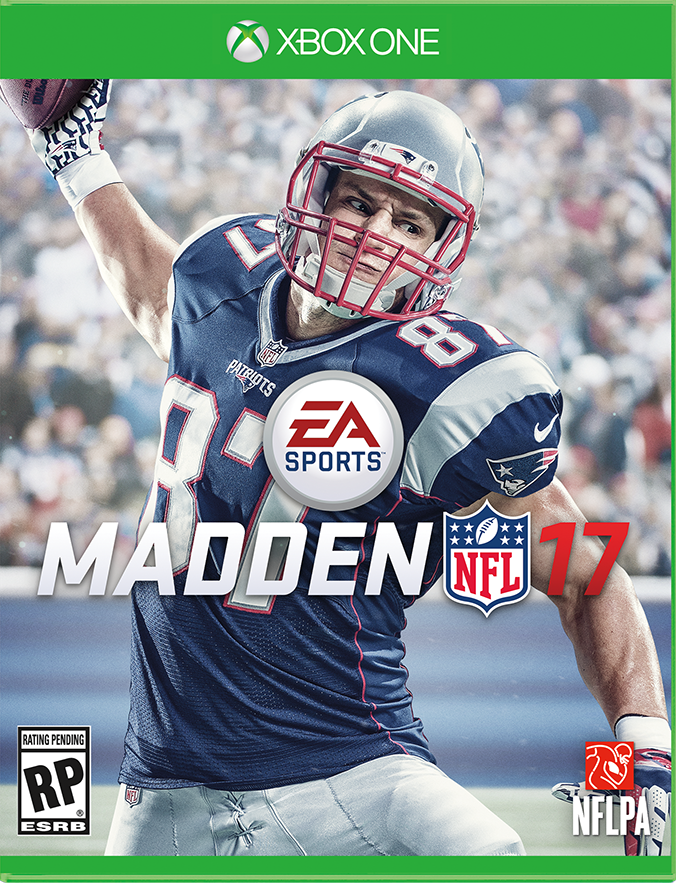
                        (Madden Gods, please don’t hurt Gronk. Credit: madden-school.com)

Regardless of my thoughts, Madden is still a brilliantly run series. Working with the right individuals and appealing to the appropriate consumers has gone a long way to making the series a hit, and the exclusivity rights agreement simply cannot be understated. The series’ commitment to quality and developing itself in the greater football community has made it the marquee sports’ game in interactive entertainment. It should be used as a model for any aspiring sports series in the market today, and I look forward to seeing how it continues over time.

Sources:
Hruby, Patrick, The Franchise: The inside story of how “Madden NFL” became a video game dynasty, http://espn.go.com/espn/eticket/story?page=100805/madden,
Surette, Tim and Feldman, Curt, Big Deal: EA and NFL ink exclusive licensing agreement, http://www.gamespot.com/articles/big-deal-ea-and-nfl-ink-exclusive-licensing-agreement/1100-6114977/, 1/24/2005


Sunday, May 29, 2016

When Brands Become Games

Key Takeaways:
Taking a risk with a mascot is key to developing the brand and reaching a large audience
Although a recurring theme, content is always king. Negativity can be damning while positivity may create unforeseen benefits
Games leave legacies for the brand

(A game based on 7 Up’s mascot Spot. Credit: Giantbomb.com)

Licensed games have a checkered past. In the early days of the NES, Genesis, and SNES, there were some high quality games based on television programs or films. Specifically, a large majority of Disney games were received favorably due to the strong products from Capcom, a trusted, high quality developer in the industry. Capcom focused its efforts on the Disney cartoons, such as Ducktales and Chip ‘n Dale Rescue Rangers, most of which were met with critical and commercial success. However, for every great game Capcom released certain companies would churn out poorly designed, sometimes unplayable game adaptations of popular movies or media, which would in turn hurt the brand significantly and likely pull support for a game sequel[1]. Unfortunately as the years have gone on the quality issue has turned more and more negative, with most licensed games maxing out at a mediocre review score. However, film and television adaptations are not the purpose of this post. Instead, this entry will focus on a subgenre of licensed games: Advergames (games that advertise a brand by featuring it in the game). More specifically, this post is all about the soda company 7 Up and its mascot, Spot, and his most notable game, Cool Spot. While there were other games that features the titular red spot, they were not as impactful as Cool Spot. 7 Up took a huge risk putting its brand into gaming systems, one that I believe paid off with the legacy it left. It was not the greatest game ever made, but it was solid, one with personality and fun, and it definitely provided the positive brand awareness needed to make an impact in a soda war dominated by two key players.

                                     
   (That can’t be healthy. Effective though. Credit: pintrest.com)

In the world of beverages, 7 Up stands out as a risk taker with its marketing. In recent memory it has made more provocative ads than its competitors (Make 7, Up Yours)[2]. Back in the 80’s and early ‘90’s, the key phrase used in the ad campaigns was “On the Spot” while other ads referred to 7 Up as the “Uncola”, differentiating it from competitors. The competitive positioning used was key for a market niche player like 7 Up that needed to make an impact. In fact, certain competitively framed advertisements targeted both Coke and Pepsi. In one specific instance, an advertisement shows a glass filled with a brown, carbonated beverage and then has the mascot Spot use a hose to drain the brown color out of the glass, revealing the clear liquid as 7 Up, and calling it the “Uncola”. If nothing else, advertising like this made 7 Up unique in an industry overflowing with competitors.


(Very cool [Spot]. Credit: Snescentral.com)

These aggressive marketing tactics lead to the creation of several games featuring Spot. While Advergames existed before (Coke had a Space Invaders clone made for the Atari where players would use a Coke bottle to shoot the letters in the word “Pepsi”), there had never been a continuous effort like 7 Up’s Spot. Cool Spot specifically was ported to several consoles, making the game relatively inescapable if you owned one of the platforms it was featured on. 7 Up bet big that Cool Spot was going to give its brand and mascot a bigger presence in the world of video games. As a child, none of 7 Up’s advertising meant much to me until I played the game Cool Spot. Released for multiple consoles in 1993, the game followed 7 Up’s Spot, the red, 7 Up spot with sunglasses, hands and feet, on his side scrolling journey to save his fellow spots. Spot could shoot soda bubbles out of his hands to defeat enemies, most of which were creatively designed (ex. crabs with polka dotted underpants). The game itself was filled with lush environments, an upbeat soundtrack (composed by noted game composer Tommy Tallarico), and challenging platforming elements. Now there were instances of repetition and the challenge skewed a little harder which detracted from the overall quality, but it was still considered a critical success. So much so that it still looks like a successful case study, and seems to be largely protected from animosity unlike a lot of other Advergames.
                                             
                            
                        (Sunglasses make mascots cooler. Credit: coolspot.wikia.com, reddit.com)

Most importantly, Spot himself resonated with users as well as most mascots. The amount of carefree swagger the character has makes him easy to resonate with. From his gingerly walking motion to his sweet shades (personal opinion - sunglasses make most characters cooler) and how his attack came from a flicking gesture. The sound effects carried over from the commercials as well, and fit with the character’s identity. I believe that even if Spot was not the mascot of a company for a period of time, the solid quality of the game would have made him a success. There is a fine line for mascots between cool and obnoxious, and Spot was certainly on the side of cool while others who’ve failed leaned towards obnoxious (ex. Bubsy…ugh). Nevertheless by the mid ‘90s Spot’s time as the mascot for 7 Up was over, which tends to be the natural occurrence with brands and specific marketing campaigns. To be fair, Spot appeared to be universally liked, but with changing markets it’s not overly surprising to see him fade away.
                                    
                                        
                                     (This is how the game starts…Credit: Destructoid.com)

More importantly though, did Cool Spot help drive traffic towards 7 Up? The answer is not simple as sales data is limited[3]. However, within the game 7 Up paraphernalia is present everywhere: a 7 Up bottle is Spot’s means of transportation into the first stage, the 7 Up logo is an extra life, and little 7 Up bottles provide Spot with extra health. Not to mention the bonus stage’s take place in a gigantic 7 Up bottle where Spot is tasked with trying to grab all the letters that spell out the word “Uncola”. Clearly the game is overflowing with advertisements for its product, so much so it might seem overwhelming to gamers. Yet, it seems that players look at the game favorably, even many years later. If you take the time to look up top Advergames, licensed games or Cool Spot reviews you’ll find that it seems to be held in relatively high regard.
                          
                                           
                                        (Looks good to me. Credit: gamecult.umwblogs.com)

In my opinion, the main reason Cool Spot was so successful is that when you say the game's concept out loud you naturally think it should be a disaster – a platforming game based on a mascot of a soft drink. Consumer Packaged Goods companies are not often present in the gaming industry and thus the initial expectation is the game will focus on branding instead of quality. Cool Spot, while still littered with a lot of advertisements for its product, made sure that Virgin developed a quality product to not tarnish their brand. Cool Spot defied the odds presented before it and left itself with a strong legacy. Advergames still exist, but few have managed to equal or surpass the reception of Cool Spot. Meanwhile, Spot has since faded away. It will be interesting to see if Spot ever makes another return. Though he did have a sequel (Spot Goes to Hollywood) it was not nearly as successful as Cool Spot. However, with retro revivals becoming popular in today’s media, I could definitely see a return for Spot. If 7 Up wants to invest in the brand in the gaming media I believe players would be very intrigued. Then again, I’m guessing the marketing team at 7 Up is much different today than the one many years ago when Cool Spot was released, so he may have to remain in dormancy as solely an example of what a commitment to a solid product can truly achieve. Now if you’ll excuse me, I’m dying for a 7 Up.


[1] LJN was a particularly poorly received game developer that destroyed the legacies of potential game adaptations
[2] https://www.youtube.com/watch?v=oGs-6oyGbdE
[3] There are no sales’ figures for the game on VGchartz.com, I’m trying to see if I can procure some figures on sales from 7 Up and Doctor Pepper Snapple Group

Thursday, May 19, 2016

Interview with Tom Kalinske - Former CEO of Sega of America

Key Takeaways:
A great team fuels the creative process
For certain brands, if you target certain consumers, additional demographics may follow
If you do things that can be copied, you don’t have a strategy

I had the distinct pleasure of speaking with Mr. Tom Kalinske a few weeks ago for my post on Sonic the Hedgehog. Mr. Kalinske has been the CEO of Mattel, Sega and Leapfrog over his illustrious career. He was inducted to the Toy Industry Hall of Fame in 1997 for his works. Mr. Kalinske is also one of the key protagonists of Blake Harris’ Console Wars, which I would highly recommend to anyone interested in the Sega/Nintendo rivalry. With the recent announcement that Sonic the Hedgehog would be inducted to the Video Game Hall of Fame, I thought it would be nice to share our recent discussion. Having spoken with Tom regarding his work, I was particularly impressed with the passion he had for the brands he worked on.  A special thanks to Mr. Kalinske for taking the time to speak with me for this blog.


                              (Tom Kalinske and Sonic the Hedgehog. Credit: nytimes.com)

JCR – What common threads and trends did you spot over the years? How did you identify market growing potentials, not only in Sonic but in other brands you worked on?

TK – Each one’s a little bit different I think of those examples, of course the classic one for me that really started everything was Barbie. I have to say that I don’t remember if this is in Console Wars  or not but when I was at Mattel and I was a Product Manager, the founder of the company, Ruth Handler, walked into my cubicle and said, “Barbie sales declined last year. The company is down to $42 million in revenue. The Wall Street analysts say it’s over for Barbie, my retail buyers say it’s over for Barbie, my sales force say it’s over for Barbie, what do you think about that?” I said, “Ruth that’s the stupidest thing I’ve ever heard, Barbie will be around long after you and I are gone.” She said, “That’s what I wanted to hear! I’m going to talk to [Kalinske’s boss] to put you on the Barbie brand.” A few weeks later I was made the Marketing Director for Barbie.

I had asked [Handler], “What makes Barbie great?” This is back in 1973, she said, “Well, with Barbie a girl can imagine to be anything she wants to be.” I said, “Ruth, that’s fantastic, I’m going to use that in all our communications” and I did while I was at Mattel over the next 17 years. I either myself used it, the agency used it, or the marketing people used it in all communications. The point of all that was with this doll, children could imagine anything they wanted to be, and it became the cornerstone of strategy for us because we did a number of Barbies that were themed to different things. I did President Barbie in 1976, I did Astronaut Barbie sometime in the 70’s, obviously we did Teacher, Doctor and even did Lawyer Barbie, but that [Lawyer] didn’t sell. I did all these different themes way back then and special fantasy play Barbies way back when as well. The common theme there was “Be anything you want to be”. Interestingly, a number of years after I left they stopped using that line and sales started declining. I noticed that this year they began using it again though.
That same kind of theme, this “use your imagination”, was really an important part of He-Man and the Masters of the Universe as well. As I’m sure you’ve noticed He-Man looks exactly like me (laughs), but that came out of research again. We researched all these different themes of male action figures, whether it was regular things like policemen and firemen to Marvel characters to DC characters to space – Star Wars was taken by Hasbro so we couldn’t do that. This heroic figure, a big fantasy figure emerged as the winner. Once again it was because he was heroic, very muscular, and he was a good guy. He was going to do good things. He was going to thwart the enemy, Skeletor in that case, and save his world, which was Eternia. So again, the same kind of thing, imagination/imagination play.

When I went to Sega and we were searching for a new character as described in Console Wars, we didn’t have a lot of choices. Right from Day 1 we began working on Sonic - we did change it in the U.S. compared to what the Japanese originally wanted the character to be: we removed the big fangs he had, [love interest], the rock band. When we smoothed him out we made him a friendlier character that everyone could identify with, but you also might have noticed, he was kind of a smart ass. Part of this was the original plan was that he was the smart ass kid next door who you really liked but he got away with a lot of stuff but he was still fundamentally a good guy. That’s part of Sonic’s personality and from my toy experience as soon as we saw Sonic, just as we had done with Masters of the Universe we started planning a television show. In 1991 I remember meeting with Haim Saban about doing a television show and that evolved into several meetings with ABC executives and then later with Andy Heyward who was running DIC Productions and we ended up doing both a network television show and a syndicated television show which had never been done before where you had both a network television show and a syndicated television show for a kids’ property on at the same time. That obviously made the character all that more popular and was great marketing for us obviously. Overall, the general theme is imagination play and being able to identify strongly with the characters.


                                               (The fastest thing alive. Credit: denofgeek.com)

JCR - After the success of Sonic the Hedgehog 1 and 2, what did you find to be the biggest hurdle working at Sega?

TK - Well in your head you know it’s really hard to continuously have a big break game from the character. After that the big struggle was how do we get the team to come up with an even better Sonic. It was really hard work. At the same time we are working on Sonic CD as we knew we had to learn how to program for CD-Rom as that was the storage medium of the future, so we’re working on that too. So it was really difficult, and if I remember correctly, we were not able to fully accomplish it. We ended up taking the next effort the team was working on and dividing it into two games [Sonic the Hedgehog 3, Sonic and Knuckles]. It was originally one game and we divided it into two, which was necessary to release on time for the business, but probably didn’t make for the best product, and I think that was the challenge. Going forward in time, shortly after I left Sega, I don’t think subsequent Sonic games have matched the quality of what we had while I was there. It’s not because of me, but just because it’s so hard to do, to maintain that quality level. One thing I will hand to Mario is that they’ve done a really good job of that for the most part. There’s a few turkeys they got out there too but for the most part they’ve done a good job at it.

Once you build a successful franchise or brand, whether it be a Barbie, or a Masters of the Universe, or a Hot Wheels, or a G.I. Joe or a Star Wars, or a Pokemon, or a Mario, you have to work really hard to screw it up. It will withstand an awful lot of abuse by the folks running the brand.


(A nice photo op for Kalinske. Credit: spokesman.com)

JCR - Having gone from Toys to Video Games, how did you learn to adapt to the culture of a product set you were unfamiliar with and grow the industry over time?

TK - Well do remember that Intellivision Group originally worked for me so I had some exposure at Mattel on video games. Of course it was completely different technology, it was 2-bit technology, which we marketed to the teen market. Also remember the original handhelds that we did at Mattel we marketed to adults, we did not market those to children. They were originally marketed as Father’s Day gifts so I had some understanding of the business. What really knocked my socks off was when I saw the difference [between the Intellivision and Genesis]. I had not been playing video games for a long period of time in between and all of a sudden I see 16-bit technology and I was used to Intellivision’s technology and holy cow was this really a wonderful surprise. Then when I looked at what Nintendo was doing, it seemed obvious to me that I had to shift the business, lead Nintendo positioned for younger children and go after teens and adults with Sega. You might say well yeah you’re doing all this sports stuff for adults but you’re also doing Sonic the Hedgehog, which was certainly for kids as well as teens and adults and that’s true; but, if you are marketing to teens, the younger brother is going to come along. To me it was all a natural transition.

I always did believe and I always tell marketing students this – you should know more about the industry when you enter into a role than anyone else in the company. You really have to study the industry and become an expert in that industry. For a while I was that when I first entered the video game industry. Today I’m certainly not, but back then I was.


               (Home of the Hedgehog, Sega. Credit: Segabits.com)

JCR - Sonic the Hedgehog has certainly seen better days on the console. Now it seems to be moving toward mobile. Do you think this is an experiment, or a long-term change, and do you agree with the strategy? 

TK - Well I’ll tell you, it’s so hard for me to figure out what they’re doing. I actually made an effort last year to get to know Sega as it exists today in the United States. So I visited their operation here in San Francisco, Sega Networks. I thought that meant they were working on networks, but that’s their mobile operation. So clearly they are moving towards mobile operations. Then I went down to LA to what is now Sega of America, and that’s now mainly a licensing arm. They are licensing the character out for products, comics and what have you. Over in Orange County there’s Atlus, which is a game development company. The interesting thing to me was none of these parts seem to communicate with one another and I don’t quite understand how you can have a cohesive strategy in the United States if you don’t have these parts all in sync. Now Sega of America in Burbank has a very strong licensing team with really smart people, but they’re not the ones doing the development. In that same office was the team working on the Sonic movie, so I did see a little bit of that work going on and hopefully we’ll see a better movie out of [that group].

If I were running it, I think you would have to have some mobile products out because so many people are using tablets or iPhones today, no question about it, you have to do something there. But I also would have Sonic still on consoles, and I would have him on more than just the Nintendo consoles, which freaks me out by the way. Given my relationship with Nintendo wasn’t so good, it’s hard for me to accept Sonic’s on Nintendo, going to the Olympics together in Rio.

                                        
   (The current version of Sonic… Credit: seganerds.com)

JCR - Say you’re back at Sega today, how would you fix Sonic?

TK – (Laughs). I have to get [my team] back in order to do it I’m afraid. It’s not me, you got to have the right team, and boy, that was such a special team. If I can’t get them, it would be really hard to recreate that same kind of intelligence and feeling for the product. That’s what it comes down to, I mean if you get the right people that really understand the character working on it I am sure they can come up with a great Sonic game. It takes time, it doesn’t happen overnight, but I’m sure they could do it. I just don’t understand how they’re operating today, but I’m no longer an expert in the video game business so I’d have to learn all these new things. I’d have to learn about Steam and other methods of distribution. I’m still a guy who believed in selling packages at retail and so much of the business has gone away from it, so much is now direct download and certainly an awful lot of it is still online. So I’d have to get back immersed in that if I were entering that role again. But to come back to where I started, it’s all about having the right team.

JCR – Well I’d advocate for a reunion.

TK – Laughs. The crazy thing is I’m still close to most of those guys. Interestingly 3 of the key members of the team were female back then when there were few females in the video game industry. I keep in touch with Al [Nilsen] and Shinobu [Toyoda] as well.

JCR – I think it’s just waiting to happen then


               (Kalinske has focused on educational entertainment as well. Credit: sega-16.com)

JCR – What’s your leadership style? How do you get a team to buy into the character, get on the same page and become that big of a success?

TK - Back in those days I was a lot tougher than I am today. I’m just a nice guy today but all my former colleagues say, “Gee you’ve mellowed a lot.” I didn’t notice this but apparently I wasn’t very mellow back then. I was pretty ferocious about going after Nintendo. It’s kind of nice when you have this one enemy to go after and form a strategy around. It’s singular in nature. We’re going to do everything we can to harm our competition and we’re going to do the best things we know how to do ourselves to make sure we make a great product.  It’s sort of fun to be on the attack mode all the time. Whether that’s in advertising, or in PR events, or you know the brilliance of Al [Nilsen] doing  a shopping mall tour where we introduced the Super NES before [Nintendo] introduced it, where we had teens come in and play Super NES and also play Genesis and then say “OK, which one do you like better?” We won those about 80 percent of the time. My leadership style would be to sit and collect the best ideas we had. Everybody would throw ideas out and we’d discuss them, and then often we would go with the craziest of those ideas. I don’t know whether that’s inspirational or not, but I did push them pretty hard: to be original, to be creative, and to be different. I think it comes out in the stories.


I always said that if we’re doing things that our competition can do we don’t have a strategy. Strategy is when they can’t fully copy what you’re doing. I think we certainly accomplished that most of the time.

JCR - I really like that, if you're doing things that the competition can do, we don't have a strategy.


If you enjoyed this post, I would recommend following Mr. Kalinske on Twitter at https://twitter.com/ThomasTkalinske

Sunday, May 15, 2016

Games for the Sake of Games

Key Takeaways:

Shadow of the Colossus is a key example of a game that can be interpreted as art
Unique marketing campaigns may be necessary for an inherently artistic game
Games have made so many leaps and bounds in multiple facets and should be considered art


                                                          (Art? Credit: returnoftheretro.com)


“To my knowledge, no one in or out of the field has ever been able to cite a game worthy of comparison with the great dramatists, poets, filmmakers, novelists and composers. That a game can aspire to artistic importance as a visual experience, I accept. But for most gamers, video games represent a loss of those precious hours we have available to make ourselves more cultured, civilized and empathetic.” (Roger Ebert, https://www.theguardian.com/technology/gamesblog/2010/apr/20/roger-ebert-games-as-art)

Despite his objections, Mr. Ebert was misguided and biased in his assessment on whether video games should be considered an art form. The quote came shortly after his poor review of the movie Doom, which was loosely based on the game of the same name. Nevertheless, as recently as the year 2000, video games have been legally awarded first amendment rights similar to their brethren in literature and film. As time has passed the debate has continued to rage, especially in more recent years as games with deeper plot lines, moving soundtracks, and unparalleled visuals have become more prevalent. To me, 2005’s Shadow of the Colossus is the game that settled the debate – games should be considered art. Specific for this blog though, how does a company sell a game that is based on intrinsic artistic value? Or are artistic games a sunk cost, meant merely to prove that the industry is capable with competing with all forms of entertainment?
                                                          

               (Music, an integral factor in the games as art argument. Credit: themmnetwork.com)

Although a matter of opinion, I believe video games have always been an art form. Perhaps this is a subjective response to validate my hobby, but I truly believe that from its inception there have been numerous features to qualify the medium as an art form. Naturally visuals play a key role in defining a game as art, as several games shift from realism to minimalist, to water colors, etc. I personally find that music is a key differentiating factor in what makes a game a piece of art. Take my last subject, Mega Man as an example. The series has always been known for one key presentation feature: music. The Mega Man soundtracks have always been unbelievably catchy, which in and of itself with limited musical capabilities on the NES is quite an accomplishment. Contrast the soundtrack of Mega Man 2 against film scores and even in some cases music albums and you’ll find that Mega Man 2  is not only comparable but in some cases may surpass the other media. There may be no lyrics and limited melodies, but the hooks and inventiveness of the themes are present, and the effort to create something beautiful is evident. Looking beyond the Blue Bomber, the level 1-1 theme from Super Mario Bros. may be the most iconic stage theme ever created. Anyone who is familiar with video games is aware of the theme, it's synonymous with gaming. In my opinion, I would compare the stage theme with the John Williams’ Star Wars’ theme, it is that recognizable. Other series are known specifically for music, such as Final Fantasy. With such an intense devotion to sound that rivals feature films, it's no wonder that national recognition has started to become commonplace. As recently as 2012, the game Journey received a Grammy nomination for Best Score Soundtrack for Visual Media, meaning video game music has now entered the realm of mainstream award recognition.


                              (Indiana Jones and Uncharted’s Nathan Drake. Credit: gotgame.com)

Where the video game has truly improved upon most though is in the story, and why I believe video games need to be considered art on parallel levels of film and literature. In the early stages of gaming, there were not a lot of story elements in gaming. Most games revolved around defeating an enemy or saving a princess. Today though, games are far more thought provoking with plot twists, betrayals, romance, etc. The developer Naughty Dog is known particularly for its excellent story lines. 2013’s The Last of Us imagined a post-apocalyptic world where a father who had lost his child needed to travel across the United States with a young girl who may have developed an immunity to the virus that caused the worldwide chaos. The character development of each individual is unparalleled in gaming, and brilliantly delivered through cut scenes and dialogue during missions. The developer’s long running Uncharted series follows a treasure hunter through his exploits across the globe in search of rare jewels and artifacts. In my opinion, it is a modern day Indiana Jones with better writing and characters (not including Raiders of the Lost Ark, which was fantastic).
                          
                                                       
                                          (Settled the debate for me. Credit: Sonicstadium.org)

Returning to Shadow of the Colossus though, the game is a tale of a silent hero who is looking to revive his deceased lover. In order to do so, the character (named Wander) must defeat 16 colossi in a forbidden land. The world is desolate, with few living beings (mainly the colossi, Wander, his horse Agro, salamanders, and birds). The player is left to explore the world searching for each colossus, guided only by the light reflected off of the character’s sword to find out where they are located. There are no other objectives to the game. The colossi themselves are enormous, something that had not been seen in gaming prior. The typical size is similar to most buildings in other games, and the process of defeating a colossus is different for all sixteen. Strategies range from scaling a colossus’ fur and stabbing it in the head, climbing up a gigantic sword after a colossus strike and then looking to attack the stomach, or shooting a colossus in the eye while riding your horse. Each battle is tense and somewhat like a puzzle, accompanied with beautiful orchestrated music and lush environments[i]. During the conquest, minimalist story sequences come from a few concerned individuals travelling to the land after Wander. By the end of the game, these characters, who include a shaman, find the player possessed. As it turns out, the 16 colossi each contained an essence of a dark entity that was locked away previously, and by slaying all the beasts the entity is released and possesses the player. The shaman then conjures up a spell to lock the beast-like monster again, and the player is forced to struggle to move towards the shaman, but the efforts are futile as the character tumbles back into a fountain and is turned into a baby. The group departs, and as there is no sign of the shaman, the deceased lover reawakens, only to find no one except the baby. She takes the baby in her arms, and with no colossi left, the credits roll.


          (A very intense ending sequence. Credit: Youtube.com)

This was the first game I ever played where a twist truly affected me emotionally; moreover, the ability to not control the fate of my character made me rethink everything I had previously encountered in gaming. I rooted for the character to bring back the princess, and to not only see it snatched away from him but also watch him become corrupted was gut wrenching. This was not supposed to happen. This was not a happily ever after. Although there may have been warning signs along the way, I bared no concern for the outcome, thinking things would turn out for the best. Nevertheless, the game ends the way that it does, and having the opportunity to play as the now corrupted character trying to approach his beloved in a futile attempt creates an emotional connection between the game and the player. That emotional connection is what leads me to believe that games truly can become an art form. In the opening minutes of The Last of Us, a 2013 survival horror adventure, the main character bears witness to his own daughter’s death, beautifully displayed and acted. It is nearly impossible to not be somehow emotionally affected by the moment. Considering the breadth of feelings that occur in such a short period of time, I would consider this game as well to be a display of artistic prowess.
                             
                                           
                              (A fake skeleton from the hoax. Credit: giantology.typepad.com)

Given Shadow of the Colossus is an adventure game focusing on boss battles and an artistic motif, how does a company market this kind of game to consumers? In the case of the game, a substantial amount of the appeal comes from the varying boss characters. The colossi are enormous, unlike anything gaming had previously seen. In order to generate interest prior to launch, an elaborate hoax was created in both Japan and North America in a blog portraying the colossi existed. The blog was titled “Giantology” and followed the findings of 28 year old on apparent giant activity across the globe (http://web.archive.org/web/20051029065715/http://www.giantology.typepad.com/). Postings included the study of giant skeletons found across the world, on land, underwater, and washed up along the shore. All the stories were fictional, and created by Sony beginning nearly 9 months before the game was released. The blog featured fake local news reports and stories as well, and the reach of the blog was wide, gathering 25 million viewers from 110 countries. It was a unique way to introduce the antagonists of the game, and as a result, the game went on to sell over 1 million copies globally. The game was also a major critical success, reeling in multiple Game of the Year awards and currently holds a 91 score on Metacritic. Furthermore, it placed highly on several game of the decade lists, including number 2 on IGN, a very prominent online publication.

                                  
              (An outstanding experience. Credit: entertainmentmonthly.com)

Regardless on your experience with Shadow of the Colossus, the central question remains: Is a video game art? I strongly am in favor of supporting games as a type of art form. In today’s world we are surrounded by all forms and facets of literature, drawings, photography, etc. from the highly advanced virtuosos of the genre to the beginners writing short stories or trying to pick out the right filter for a photo of a sunset. At the end of the day, if an emotional connection between a person and the medium occurs I would consider it art. I know my perception of art may be different than others, but I do not understand why some individuals are closed off and overly protective of the term art. There are varying degrees of art quality, but the concept itself should be accessible. It’s worth noting as well that there may still be a generational gap present. Video games became popular when Mr. Ebert was in his late 30’s/40’s, so I think it’s fair to assume that he might have been biased not having grown up with the medium, and I think it will be interesting how the arguments develop over time. Lastly, the fact that video games finding their place as art is controversial is a good sign, because I believe that historically controversy is a good sign that an impact is being made.


[i] Seriously, Kow Otani’s score is absolutely brilliant, I highly recommend it.