Tuesday, October 11, 2016

Death of a Franchise


Key Takeaways:

Much like film counterparts, game franchises typically die due to lack of sales and interest
Timing is one of the most important factors in the success or failure of a franchise
Occasionally, a franchise vanishes due to the closure of a development studio
Nostalgia trips are potentially the only way a franchise can be revived, but unless they can reclaim former sales numbers or surpass them, they’ll likely remain dormant


          (Basically…Credit:Whatculture.com)

If you’ve read any of my blogs post since I started up back in April you know I love old games. That’s not to say that I don’t love new games, in fact, The Last of Us is probably one of the best 3 games I’ve ever played. That being said, the gaming industry has become a lot more mature than it was in the 1980’s and 1990’s, and I cannot help but enjoy reliving the wild business antics that are a part of the industry’s history. So many unique and long lasting games and franchises were born from this era. Today, you will never find another game like ToeJam & Earl - a game about two space aliens wandering around a strange looking Earth while searching for pieces of their spaceship and avoiding injury from the likes of mini-devils, Cupid, and what appears to be a stampede of Black Friday shoppers. A game with that concept would likely never make it to fruition in today’s industry without a lot of help from Kickstarter[1]. Yet, even back in the glory days there were still a handful of high quality, unique games that just never seemed to get their feet off the ground outside of a few entries. This post will take a look at a few cases and try to rationalize what went wrong.

Case 1: Vectorman vanishes out of this dimension


                              (Who could deny Mega Value? Credit: hardcoregaming101.com)

Vectorman had all the makings of a hit in the 1990’s. A run and gun platformer where you played the titular hero, whose role was to take out the evil Warhead. The atmosphere was more on the dark and edgy side, and the main character, a robot made of green orbs, was cool, calm, and collected. His traditional weapon was a ball gun that could blast enemies in multiple directions, and could later be powered up. Furthermore, Vectorman himself could transform into vehicles or items such as a drill or bomb. Due to a significant amount of advertising spending Vectorman and its sequel were both solid hits for the Sega Genesis; however, Sega made one crucial error – it released the games far too late in the Genesis’ lifespan. The original game came out in October 1995, nearly 5 months after the Sega Saturn was released to the public. Sega was fortunate to gain a following for the game, but questions remain whether or not it came at the expense of promotions for the Saturn[2]. Regardless, Blue Sky Software, the developer of the series, promised a new outing by the end of 1997. Unfortunately, that outing never came to be, as Blue Sky closed during that same year, and the project was lost. There are few details behind the end of Blue Sky, but the main rumor is that Sega/Blue Sky were not happy with the quality of the new game. Vectorman than remained dormant until May 2003, when Sega announced that the franchise would be coming to the PS2 (Sega was out of the console business at this point). Then, without much reasoning in October 2003, Sega announced the Vectorman 3 project was dead again, simply stating that it has chosen not to continue with the project[3]. With that, Vectorman vanished, and hasn’t been seen outside of compilations or virtual console releases since.


(A missed opportunity for the Saturn? Credit: Gamefabrique.com)

There are two significant reasons as to why Vectorman vanished, the first of which has to do with timing. As previously mentioned, the original game came out months after the Sega Saturn was released. I actually believe that this was a fine strategic decision. The Genesis had an extremely large install base, and launching a new franchise on a new console with no familiarity to users may not have been the system seller Sega wanted, especially if they did not promote it extensively with the console. Where I see the true error is in the sequel’s release. Vectomran 2 was released in November 1996, a year and a half after the Saturn was on the market. Now it’s no secret that the Saturn struggled from the moment in launched, mainly given it had to compete with Sony’s lower priced PlayStation and the incoming threat from the Nintendo 64; however, aside from the fact the game is in 2D as opposed to 3D, I have no idea why Sega would not choose to release the sequel for the Saturn. Vectorman had established brand equity, and the sequel presented an immense opportunity to generate sales for the Saturn. I realize that during the late 1990’s there was a huge push to move towards fully three dimensional graphics, but when a console is desperate the parent company should do all in its power to make it successful. I understand that Vectorman 2 was also a success for the Genesis, but it could have done a lot more for Sega if it had been put on the Saturn, perhaps even as a bundle with the console. Unfortunately, that’s a reality we will never know.
The other key reason Vectorman vanished is the closing of Blue Sky Software. Although a longtime successful development studio, when it closed the majority of its franchises faded with it. There have been few times in the gaming industry where a development studio or publisher has closed and franchises have made it through unscathed (one example is how THQ’s assets were sold off following its bankruptcy). If an upcoming game from a fledgling developer is not already in a playable format or has not been overly successful in previous iteration, it is even more unlikely anyone will pay to gain rights to the franchise. Furthermore, with turnover and buyouts due to financial trouble, the direction of the franchise may no longer be up to the original studio, and thus, it disappears quietly from existence. Such was the case with Vectorman, and unfortunately it looks like unless a nostalgia fueled campaign exists, he’ll remain in obscurity.

Case 2: Rocket Knight’s Revival Can’t Reclaim Past Glory


(Ready to go. Credit: Youtube.com)

The 1980’s and 1990’s were overloaded with too many mascots. Mario and Sonic led the charge, and almost every publisher/developer came up with one to try to make a name for itself. Konami had the Castlevania, Metal Gear, and Contra franchises, yet those game focused on main characters being people instead of animal/cartoon mascots and were not as approachable as the aforementioned icons. Thus, in 1993, Konami released Rocket Knight Adventures for the Sega Genesis. The game focuses on Sparkster, an armored possum who uses a sword and a jetpack to defeat evil pig invaders[4]. The game is a side scrolling platformer, and is extremely easy to pick up and play (it has a very arcade feel to it). I honestly had not ever played this game up until a month ago, but it hooked me right away as it was extremely accessible and a blast. It was a huge success for the Genesis, and is still considered one of the best games for the console. Sparkster was also an excellent addition to the mascot dominance of the Genesis, following strongly in Sonic’s footsteps. Konami then released two games for the franchise a year later, a direct sequel for the Genesis, and a spin off for the Super Nintendo. While both of those games were not considered as good as the original, they both seemed to find an audience. Building off the new success, Konami did absolutely nothing for 15 years[5]. Sparkster made cameos in various games, but never received a third installment of the franchise, that is, until Mega Man 9 fueled the retro revival in gaming. Due to the success of Mega Man 9 and its return to the early 8-bit graphics, several other companies attempted to bring out their old mascots to see if there was any life in them[6]. This included Bionic Commando, Sonic, Contra, etc. A lot of companies thought this method would both please established fans and save development money. Naturally, this presented an opportunity to bring back Sparkster. The revival was dubbed Rocket Knight[7]. The game contained similar characters and gameplay (with a few tweaks naturally), but also sported updated graphics. Unfortunately, upon release in 2010, the game was met with mixed to positive reactions. It came across at certain times like a cash grab, as noted in the 1up.com review:

But for a fifteen dollar download, Rocket Knight feels strangely underdone, as if you were playing an extended demo. There are only about a dozen levels and not a lot of variety. Although some of the levels make a visual splash and verge on the outright spectacular, the sound consists of only a few whooshes and clanks as you go along, with the obligatory ding every time you pick up a gem. If you were to turn the music off -- and lord knows you're going to want to -- you could play this game in the library without being shushed overmuch. (http://www.1up.com/reviews/rocket-knight-review)

It’s important to realize that in 2010 retro revivals were no longer a new and exciting innovation. Mega Man 9 was released in 2008, the industry had caught onto the concept and embraced it fully. Furthermore, certain successful games stayed fully true to their roots, while Rocket Knight may have tried to change a little too much.


          (1993 vs 2010, 1993 wins. 2010 is just so lame. Credit: Wikipedia.com)

As a result, Sparkster has not been seen since. Once again, there are a few reasons as to why. First, by year end 2010, the game had been downloaded only around 10,000 times. This is probably the biggest kiss of death there can be for a franchise. I would imagine the lack of enthusiasm was twofold: the game had changed too much for those who knew it, but for those who didn’t, there simply weren’t enough games in the franchise to create longtime brand equity. Gamers know Sonic, Mega Man, and the Contra series, even if they had not played any of the games. Sparkster simply did not have the following.  Couple this lack of interest and sales, along with an overall mixed reaction, and unfortunately you have a recipe for the end of a franchise.

While I do believe there is always another opportunity for the future, it seems more unlikely than ever for either Sparkster or Vectorman. If I were to guess, I’d say that Vectorman has a better shot of coming back than Sparkster, simply because Sparkster tried to return and failed. That being said, I would not be surprised if we saw both or neither of them ever again. Only time will tell.


[1] Ironically, a modern remake of the original was Kickstarted a little while back, it should be out in 2017…I’ll buy it
[2] The Sega Saturn and Sega’s other add-ons to the Genesis are a whole other set of posts, sometime possibly in the distant future
[3] http://www.ign.com/articles/2003/11/21/sega-rumor-clarification

[4] Eat your heart out Angry Birds
[5] Konami needs its own case study. From mishandling Hideo Kojima’s exit to the lack of interest in specific franchises (RIP Zone of the Enders) I have no idea what direction this company is going in.
[6] This is just my opinion the Mega Man 9 started the trend; however, it was a shock to the industry when it occurred so I stand by it.
[7] How late did you stay up thinking of that one Konami?

Saturday, September 10, 2016

Pokémon GO Takes Over

Key Takeaways:
 A well-managed brand can create decades worth of value
Moving to a platform with a huge install base provides an opportunity to capture even more value than originally predicted
Never count Nintendo out


        (They’re here to stay. Credit: www.Forbes.com)

Some of you may have seen in the past few months that Pokémon has returned to the mainstream media with a vengeance. On July 6th, Pokémon Go, Niantic’s Pokémon themed mobile game hit the app store in the United States, and has caused a frenzy across the country. In only a few days since released, it has been able to accomplish the following:


  1. Raised Nintendo’s market value over 9 Billion (yes, billion) dollars
  2. Topped the daily user numbers of Twitter, Tinder (on Android phones), and more engagement than Facebook
  3. Brought to light just how powerful a well handled brand can be sustainable over time

Suffice it to say, the game is a huge success. In fact, the peak daily active users have been so high they have broken the record for a mobile game previously held by Candy Crush. Pokémon Go may even approach the numbers of Snapchat and Google Maps. Few people could have predicted the runaway train of success. As a result, Niantic, The Pokémon Company, and Nintendo have been reaping the rewards. Even I forgot to mention it back in April during my Pokémon post as I focused on the core games. I was aware it was coming but I knew virtually nothing about it, and totally whiffed on the opportunity to talk about the opportunity it would give Nintendo for the future. While the interest has declined mightily after the summer craze, it has had a huge, immediate impact on the industry, showing just how powerful a well-managed brand can be.


                                            (Wouldn’t you want one? Credit: serebii.net)

So what exactly is Pokémon GO and how did it catch fire since its release? The premise is to create your own avatar and essentially go out in the real world and catch all nearby Pokémon that appear. Pokémon appear at random, and vary by location (I get a lot of bug Pokémon in my neighborhood, trying to say something about my living conditions Nintendo?). When a Pokémon appears on your phone screen, the user needs to touch it, and then a mini game will ensue using the augmented reality system in place. Basically, using the camera in the phone, the Pokémon will appear right in front of the user, and the user will then need to flick pokéballs at the creature in hopes of capturing it. After capturing a Pokémon, users can power them up, look to evolve them, and as the user’s level increases, battle their creatures at a gym. Gyms are real world venues that teams can take over and hold onto over time. Furthermore, there are places called Pokéstops, which are, again, real world locations where users can pick up items or more pokéballs. The game intrinsically pushes the player to walk to new areas to hunt for new gyms, creatures, etc. Furthermore, users can pick up eggs that will only hatch after a walking requirement has been completed. The walking requirements are also based in distance, not steps, and Niantic has prevented cheating by not taking movement data after a certain speed limit. There is currently no trading or battling friends, two of the key cornerstones of the franchise, and needs to be implemented for long term success. As far as I can tell thus far, these are the main objectives of the game, and admittedly, while I do find it fun and addictive, it lacks the depth I enjoy in the core Pokémon series.


           (The classics. Credit: www.Nerdist.com)
   
Regardless of what I think though, it has to be the most successful game in the franchise since the original Pokémon Red/Blue/Yellow. In my opinion, I do not think it’s that hard to understand why it’s become so popular. First of all, Pokémon has never lacked success, with 2013’s Pokémon X/Y selling nearly 14 million copies worldwide. That game was on the Nintendo 3DS, which at the time probably had an install base of around 20 – 30 million users. Pokémon Go was produced for iOS and Android platforms, where approximately 1.4 billion smartphones sold in 2015, so the install base was extremely larger than the 3DS. Since the app is free, there really is no reason to not give it a try, as opposed to the typical $40 price point for the core games. Nintendo essentially found all the users who had previously enjoyed the series but had switched to mobile for their preferred platform. The popularity has even spurned users to pick up old games, as sales of the original titles has increased dramatically. I look forward to seeing how Nintendo positions the renewed interest in the franchise from the app with the upcoming games in the series, Pokémon Sun/Moon.


                (Pokémon can be anywhere. Credit: Vox.com)

Furthermore, Pokémon Go may be the best secretive fitness app. Staying still to play the game will get you nowhere, you need to go find new places to find Pokémon and greater benefits. While there have been some drawbacks (ex. users walking into traffic, like your graceful author) they have not been nearly enough to outweigh the benefits. Gaming and gamers constantly fight a battle against stereotypes, the biggest being that gamers are out of shape. While more games have been made to get gamers fit, most of them have been fads (RIP Wii Fit and Dance Dance Revolution). Pokémon Go never announces its intention to be fitness, but walking and moving around is inherent in the gameplay. As a result, adults are pleased with the positive impact it’s having on their kids, and I commend Niantic for the sneakily great decision. Lastly, like Candy Crush and other successful mobile games, Pokémon Go does not throw micro transactions in your face. In fact, I had to search through the app to find out if there were purchase opportunities (there is a shop section, but you need to tap into the main menu to get there). It’s these savvy moves that make the game extremely likable and approachable, key ingredients for success in the mobile space. Finally, with the immediate success Nintendo has realized the value of the mobile space, and announced Super Mario Run at the recent Apple conference, an endless runner starring Mario, the company’s most famous character. As a result, the stock has increased dramatically again, as investors approve of the interest in mobile.


                                     (Pikachu and Mickey together. Credit: Deviantart.com)

I have had a longstanding theory about the Pokémon brand that I believe has been confirmed with the early triumphs of Pokémon Go: Pikachu is my generation’s Mickey Mouse. Although gaming characters like Mario, Sonic, or (my personal favorite) Mega Man have garnered legions of fans, and while Spongebob Squarepants has certainly made a claim for the title, none of the gaming characters are nearly as beloved (I will concede that Mario is close). Spongebob on the other hand is beloved, but the part of his appeal had to do with the humor of the show was great for both children and adults. The humor for adults has certainly waned over time, thus hurting the character’s image. Pikachu on the other hand, is the perfect mascot. Cute but ferocious with a lot of personality, Nintendo really picked the perfect face of the franchise. The fact that he is semi rare in Pokémon Go only adds to the intrigue and appeal of the game. Furthermore, throughout the franchise’s 20 year history, there has never been a truly bad game, meaning that the character has always been associated with a quality product. Combine these attributes with an onslaught of merchandise featuring the electric rodent and you have a clear cut winner, one that clearly is not going to be slowing down anytime soon.

Sunday, August 28, 2016

Strategy Gone Wrong

When I began this blog a few months ago I had hoped to focus on successful games and failures. For better or worse, I have spent most of my time on the former, while instead looking at the more obscure instead of outright failures. As a result, I’ve been left to question why the games or genres did not live up to the potential. Well, for this post I decided to focus on a couple of case studies of definitive failure, utilizing some of my key takeaways from earlier posts. These three cases have very little to do with one another, but have done some irreparable damage for both themselves and at times, for gaming as a whole. They also show that no matter what decade, failure is always a possibility. While it is always fun to look at the successes as models for the future, we cannot forget the disasters and the pitfalls to avoid. With that in mind, enjoy the following case:

Part 1: E.T. begins the video game crash of 1983 and is literally buried in a desert.

Key Takeaway Forgotten: “A delayed game is eventually good, but a rushed game is forever bad”
                                     

(Well the title screen is legit. Credit: Youtube.com)

Back in the early 1980’s the video game industry was still in its inception. Arcade cabinets had recently become popular and consoles were just beginning to enter households. At the forefront was Atari whose Atari 2600 console was the most popular in the industry by far, with games ranging from adventure, to sports, to action and more. Atari had a dominant share of the market, and all developers wanted a piece of the pie. As a result, Atari allowed developers to make cartridges for its platform without a formal quality control procedure, leading to some poor and inappropriate titles. Furthermore, additional console companies (including the Intellivision, Colecovision, and even Apple) appeared to capture market share. Without the proper quality control in place though, Atari ended up dooming itself, and potentially destroying the entire industry, all of which was largely attributed to one game, E.T.

E.T. the Extra Terrestrial is one of Steven Spielberg’s greatest cinematic achievements. Its tie in game is the face of the video game crash of 1983. The film, released in June 1982, was a critical and commercial success, and an icon of the 1980’s. To profit off of the success of the film, Atari jumped at the opportunity to claim the licensing rights to the brand, and after acquiring the rights to the game in July 1982, immediately moved into development for Christmas that same year. Because of the manufacturing and marketing campaigns, the game’s development needed to be completed just under 6 weeks. Now while games may have had short development cycles in the 1980’s, a 6 week development cycle is simply too short to come up with an entertaining product. There needs to be additional quality assurance testing, focus groups etc. Atari however, determined to remain the market leader, did not believe the time frame was too short, and in turn released a game that holiday season that was buggy, uninspired and not fun. The game revolves around the titular alien, where the players searches to find three pieces of a cosmic telephone to phone home. During the game the player can randomly fall off screen and is constantly hunted by men in trench coats representing the government. After finding all pieces the cycle begins again. Needless to say, with a game very different and less entertaining than the movie it was panned by both critics and fans. However, because Atari thought the brand recognition alone would generate sales it overproduced the number of cartridges significantly. So many cartridges were made that Atari decided to bury them in a landfill in Alamogordo, New Mexico, which were later excavated in 2014 (Google it to check it out, really interesting).
                               

             (Talk about buried treasure. Credit: Variety.com)

The legacy E.T. left on Atari and the gaming industry as a whole was extremely detrimental for the evolution of the business. Atari was forced to take huge losses, and though it remained in the console industry for a considerable period of time, was never able to fully recover to a market leader status again. Consumers shied away from home consoles and arcades for years until Nintendo came into the market with its Nintendo Entertainment System. Arguably most importantly though, E.T. left a horrendous black mark for any licensed games, one whose effect can still be felt today, as good licensed games tend to be the exception, not the norm. What’s most frustrating is that the potential for a great E.T. game was extremely high, it just needed additional time to come up with a feasible and respectable concept. Nevertheless, we are left with the E.T. game that was produced, one that will live in infamy forever.

Part 2: John Romero vexes consumers and then puts out a horrible product.

Key Takeaway Forgotten: Unique marketing campaigns may be necessary for an inherently artistic game”
                                                     
  
                                              (I see no way this ad could go wrong. Credit: Kotaku.com)

Admittedly, Daikatana was not an inherently artistic game. Nevertheless, it’s imperative to understand its marketing campaign to realize what a failure it was, even before the game was released. For those who don’t know, Romero is best known for his work with John Carmack on Wolfenstein, Doom, and Quake, all first person shooters that help galvanize the genre. He and Carmack were thought to do no wrong. Romero was the more vocal of the duo, and after an extended period of time the two grew apart, specifically during the development of Quake where Carmack did not think Romero was doing enough work. Romero resigned and formed his own company, Ion Storm, where he went on to make Daikatana, a futuristic first person shooter about rival clans. At E3 1997, Romero announced the game for release in Christmas 1997; however, it did not see release until 2000. Although that was a significant problem, the real issue was in the advertising campaign. As early as 1997, a print ad appeared where a red poster backdrop stated in black lettering “John Romero’s About To Make You His Bitch”, with a small additional “Suck it Down” at the bottom of the ad. Naturally, this ad was not well received by just about everyone (even Romero was known to be hesitant before signing off). Personally, testing the boundaries of advertising seems like a solid way to garner attention; however, if you plan to antagonize potential consumers you better bring a product that’s going to blow them away, otherwise you’ll be setting your product up for failure.


                       (I know it’s 2000 but that looks awful. Credit: Superadventures in Gaming)

After countless delays where the product builds were scrapped and reborn, the game was finally released in 2000 with a resounding thud. Averaging mixed reviews for everything from content (including brain dead AI sidekicks) to graphics to technical prowess, the game did not live up to expectations. Romero would later apologize for the infamous ad, citing that he had previously had a great relationship with the gaming community (which is true) and that the ad ruined everything (which it did). Romero has gone on to make other good games, but Ion Storm closed within a year of release, and unfortunately the memory of Romero is left tarnished to some degree.

Part 3: Mighty No. 9 gathers a lot of money at the expense Mega Man fan emotions and then proceeds to do almost everything wrong.

Key Takeaway Forgotten: "Do not blame the fans for your mistakes”

              
          (Blue bomber or bust. Credit: Kotaku.com)

First of all, I believe in Kickstarter campaigns. Shovel Knight is a retro romp for the ages and was born through a Kickstarter campaign, so I know that in the right hands young developers can still create incredible games. So with that being said, imagine the joy that came to my face when I saw that Keiji Inafune, the “father” of Mega Man, was creating a new game, Mighty No. 9. The game was largely influenced by the Blue Bomber, and even more exciting to me was that I could help contribute to the game’s fruition via Kickstarter. The year was 2013 (the month was March if I recall correctly), and Mega Man had not seen a new entry since 2010 when Mega Man 10 was released. Since then, numerous games had been cancelled and Inafune had left Capcom. Things looked bleak for the future of the franchise, but here was a brand new IP, specifically for Mega Man fans.

Mighty No. 9 was a way to get excited again – the team was made up largely of individuals who had worked on previous Mega Man games, the music was being composed by Manami Matsumae, one of the original composers for the franchise, everything seemed perfect. I bought in hard, and ended up donating $251 to the cause. I wanted the rewards, the game, and really to show Capcom that I would go to these lengths to get my hands on a something similar to a formal Mega Man game. With a goal donation amount of $900,000, Mighty No. 9 grabbed over $3 million in donations in 48 hours, and raised a total over $4 million in its lifetime. Everyone was excited for the new beginning. After the Kickstarter ended anticipation began to swell, even though it would be years before the product was actually released. The forums were ablaze, and backers of the Kickstarter seemed to be in good spirits. Then things began to turn. Inafune asked for more money via Paypal (he actually managed to get around $150,000), which seemed odd and unnecessary. Next, controversy after controversy began to spring up. The first controversy I can recall was over the community manager, a young woman who had little experience with Mega Man games that managed to get a role at Inafune’s company, Comcept. She supposedly banned several members of the forums for questioning her expertise, and then was questioned on how she got the job. The whole controversy was extremely ugly, and while her qualifications were fine to question, the misogynistic and boorish nature of some of the backers was completely unwarranted. Soon after the fans began clamoring she lost her job. Now I recall reading that she may have had her own opinions on certain issues, but it is unfair to accuse her of using influence on the game. Furthermore, I think the cruel and unusual attacks on her person were unnecessary. Unfortunately, she did herself no favors by responding to the text assaults. Regardless of the final outcome, it was an ugly look for the game, which had backers wondering where their money was going.
                                               

(Wait how much money did they get to make this? Credit: Youtube.com)

The next controversy came approximately a year after the game was announced. Inafune went on to announce a cartoon featuring the characters of the game. Mind you, we are still another year from the supposed release of the game, and he begins trying to drive up interest in a cartoon for an unreleased game. This is a case where the exposure is a little too over the top. Considering the cartoon promotion seemed very childlike while the individuals who funded the game were probably not the core demographic, I had absolutely no idea why the team would consider this. A year later around the supposed release date there was little news, until Inafune unsurprisingly delayed the game to September 2015. While all of this was frustrating, gamers were still being patient, hopeful the game would still be fun upon release. While announcing the delay, Inafune made sure to note that live-action film would be adapted for the game. Now there would be a movie that no one wanted along with a cartoon no one wanted.


(Hey can you give us more money for another game before the original game you donated towards comes out? OK thanks! Credit: 1080plus.com)

Then, even with Mighty No. 9 in development hell, Inafune attempted a second Kickstarter, called Red Ash. The game was going to use the same characters from Mighty No. 9, just redesigned to look older. The concept of the game was similar to the Mega Man Legends’ series, where the player assume the role of Mega Man Volnutt, who goes on an adventure unlike the original series (more like a Legend of Zelda game, just with a mega buster instead of a sword). The game consists of travelling to ruins (dungeons), searching for treasure, and fighting huge bosses along the way. They are underrated games in the Mega Man lore. One of the biggest issues with Inafune’s departure from Capcom is that Mega Man Legends 3 was cancelled shortly after he left the organization, even though a prototype was promised to the community. Red Ash was simply meant to take advantage of the loss of Mega Man Legends 3, the only problem was that with over two years waiting for Mighty No. 9 and foolish side projects in the way, fans did not take the bait. With a goal of only $800,000, the funding was not met, although apparently the development for the game is still happening thanks to a timely rescue from a publisher. Overall, patience for Mighty No. 9 was now wearing thin. Before a fan would invest again it was necessary to play the game that was originally promised. Unfortunately, as September 2015 came about there was still no game, and a subsequent delay to February 2016 followed. Fans’ patience was all but gone. You can only imagine how in January 2016 when the game was delayed a third time (to a vague Spring 2016) what happened. Fans were irate and hope in the game was all but lost. Meanwhile, Capcom released Mega Man Legacy Collection, an extremely fun compilation of the original NES games with a ton of challenges for the longtime fans. I highly recommend it if you’re interested in the franchise at all. Being able to come out with a compilation title after announcing the game later than Mighty No. 9's original announcement while also releasing it to the public well before the Mighty No. 9 release was a suave way of still demonstrating the superior Mega Man brand.

Finally, in June 2016, Mighty No. 9 was released to the public. Since its release it has received extremely mediocre reviews, with most critics saying that the soul of Mega Man is nowhere to be found. Inafune shrewdly has taken responsibility of the issues, but still had the audacity to say that “it’s better than nothing” in an interview. While he’s not entirely wrong, I know that if I could have a do over, I would’ve paid $20, just so I could get the game. Although Inafune may want to create a franchise out of this character and game, I have to believe the future is strongly in doubt given the negative experience and reaction. If Inafune and his company had not spent so much time poorly communicating (and occasionally alienating) with the fans, perhaps there would be a better outcome. The entire campaign did not seem to be remotely professional, and that lack of experience showed over the time it took to develop the game. I do believe that limiting the amount of communication and tempering expectations with the fans would’ve lead to a more successful project. Instead, Inafune presented the fans a concept that was simply too difficult for him and his team to live up to, resulting in an unmitigated disaster on multiple levels. The worst part is that this experience has changed my views on Kickstarter campaigns. I absolutely love independent games. Indie games are one of the few areas where I can get that old school challenge I love (ex. Elliot Quest, Limbo, Shovel Knight, etc.) and occasionally artistic qualities you won’t find in big budget releases. However, because of Mighty No. 9, I do not see myself overpaying for a game anytime soon. If I see a game I’m interested in I’ll pledge enough to just get the game, but I believed in Mighty No. 9, and it took my faith (and money), thought about other ways to make more money, and put out a mediocre product. I know for a fact I’m not the only fan left scorned after this game. At this point, I have play time with the game and can safely say it has not hooked me like the blue bomber’s outings. It’s not bad by any means, but it did not live up to the hype that I previously thought it could. Now, I can only hope Capcom brings back Mega Man soon.

Speaking of alienating the fans, check out the trailer below, officially released by the publisher, followed by a parody of said trailer…


Tuesday, June 21, 2016

A Puzzling Endeavor


Key Takeaways:
Puzzle games go beyond the traditional gaming segments
Tetris is a gaming behemoth that seems poised to be around forever
Delivery technique is crucial when bringing micro transactions into the fold.


                              (“From Russia With Fun!” Perfect. Credit :superluigibros.com)

Despite my passion for interactive entertainment, my family has not been nearly as interested in the hobby. My brother is a fan, but he got more interested in the media in his teenage years. My father could care less about video games today; however, when he was in his mid-twenties he did make his own map of Ganon’s castle from The Legend of Zelda[1]. My mother though has always been a huge fan of a handful of games over the decades. She enjoyed Tetris when it was first released and today she is a Candy Crush expert. Her absolute favorite game is Dr. Mario, and she’s damn good at it. It took me to get to my 20’s to stand a chance against my mom, and while I can beat her today, if I let my guard down for a second I’m doomed. She never gives up. The point of this story is that her favorite games have been puzzle games, an extremely underrated genre that has been able to continuously evolve over console generations. Tetris is a gaming icon, and is currently the greatest selling franchise of all time. Candy Crush is one of the most dominant mobile games today, worthy of a $6 billion in the recent sale to Activision. Regardless, what if I told you that there would be a genre of games that never drastically improves graphics, has no inherent targeted segment, and almost never has a story, would you think it could actually be successful? Well, if I had to bet on one genre to stand the test of time, it’s the puzzle genre, and the commitment to gameplay is what makes it stand above the competition.


                              (The man behind the blocks – Alexey Pajitnov. Credit: Wikipedia.com)

To begin, let’s start in the past, back when the Soviet Union was around and gaming was rebounding from the crash of 1983. Everyone remembers how Nintendo and Mario were able to resurrect the hobby, but back in 1984, a man by the name of Alexey Pajitnov single handedly developed a game for computers to take seven different types of puzzle pieces and rotate and arrange them across a floor to complete a row of blocks with no gaps. Once the row was completed it would evaporate. This game is Tetris. The trick of the game is that the puzzle piece fall one by one in real time, so while the player tries to position the correct pieces he or she must also prepare for the next block. Furthermore, as the game continues the rate the blocks fall at increases, thus making the player more reactive and thoughtful. The concept of the game is incredibly simple in nature, but challenging as the player progresses. Different strategies lead to different point totals and level increases. There might be nothing more satisfying in gaming than taking one of the “I Block” (a 4 length block with no dip, simply straight) and rotating it vertically to knock out 4 rows at the same time. The game was a hit in the Soviet Union, spread to Europe, and by 1987, North America as well. Little to no marketing efforts outside of advertising were necessary as Tetris was a global phenomenon. Interestingly enough though, Pajitnov saw little in royalties for a number of years, since he created the game from the Soviet Academy of Sciences. Therefore, the rights to the game belonged to the Soviet Union, and while they had their own issues distributing the rights, ended up receiving funding for Pajitnov’s creation. After the Soviet Union was dissolved Russia retained the rights until 1996, after which Pajitnov received them and started his own company, The Tetris Company. Tetris is still around today, and during its lifespan has amassed an astronomical 495 million sales across all the platforms it has been ported to, which is remarkable. It was also used as a selling point for the original Game Boy console, which led to 35 million sales of the game. Needless to say, Tetris has to be considered one of the most successful games of all time.


         (Simple yet satisfying. Credit: gameboygalazy.wordpress.com)

The question then becomes how and why did this simple game become a global obsession. The truth is that while there may have not been a lot in the way of advertising, the game itself targeted all segments. In most of my previous posts I’ve (shockingly) focused on games I’ve enjoyed, or games that might be more applicable to children or young males. Tetris appeals to everyone. In fact, it could be argued that puzzle games as a genre appeal to everyone. Being able to appeal to women, adults, children, etc. goes a long way when creating a hit. There is no one segment it targets, instead casting a wide net across all age ranges and genders. Even my Nonna (Grandma in Italian) has played Tetris[2].  Furthermore, being the puzzle game that it is, Tetris goes beyond the conventional norms of gaming. Gaming is sometimes negatively portrayed in the media for its excessive violence or foolish antics that can be argued bring little to no benefit. While I would naturally argue the opposite, Tetris presents a strong argument itself. Tetris has been studied extensively by scientists over the years, and findings have shown that Tetris can improve your brain’s efficiency and has been known to help people with post traumatic stress disorder reduce flashbacks. I would argue that the puzzle genre as a whole could offer a lot of similar benefits to Tetris, even if other games have not been studied as extensively.


                         (Candy Crush, today’s puzzle champion. Credit: knowyourmobile.com)

Puzzle games have continued to show up since Tetris, but their adaptability to current industry dynamics may make them indispensable. For example, Nintendo has always played its part in the puzzle genre. Tetris has been a mainstay on its consoles, but Dr. Mario has found its footing as well, along with Pokémon Trozei. Nintendo has strategically placed its characters into unique puzzle concepts to get multiple sources of buy in. Furthermore, developers realize that puzzle games are great in long or short bursts, but play especially well when users are on the move, which I would credit Tetris for primarily. Regardless, the Nintendo DS, PlayStation Portable, and current Smartphones have seen a plethora of puzzle games, all with their unique styles. Currently, Candy Crush is the puzzle game of choice, and with its brilliant micro transaction strategy has become a force in gaming. Although micro transactions sometimes have a negative connotation in the industry (“Pay to win” is a term I use occasionally to describe poorly designed games with micro transactions), if done correctly, there really is no harm in them. By done correctly, I specifically mean giving the player the opportunity to beat a game without needing to pay extra, but releasing certain benefits should a player want to pursue a purchase. A perfect example is how Candy Crush deals with a user running out of lives. When the game begins a user has 5 lives and is given the opportunity to complete as many levels as possible, and each level has a designated amount of moves the user has until he or she has run out of opportunities to complete the level, at which point a user will lose a life. If the user loses 5 lives he or she will have to wait until at least one replenishes, which is timed at 30 minutes after the first life is lost; however, the user can also choose to instantaneously replenish the stock of lives for $1 instead of waiting. This is the perfect opportunity for the game to gain some revenue without coming across as obnoxious. That really is the key to a micro transaction – it’s never about the transaction itself because users expect it. Instead, it’s about the way the developers say it. Delivering the message is a big part of the battle, and will continue to develop as the industry progresses.


      (Time manipulation and platforming to solve puzzles – Braid­. Credit: insomniac.ac)

What I find to be most interesting about puzzle games as a whole is how they’ve worked their way into all different genres. Puzzle platformers are a legitimate genre, with 2008’s Braid a perfect blend of the two. Furthermore, The Legend of Zelda, one of gaming’s longest running franchises, is particularly known for its head-scratching puzzles. Some might even say they are the biggest draw of the games. I know I’ve struggled with some in dungeons, but nothing feels more satisfying in a Zelda game than figuring them out.[3] Pac-Man is even technically considered a puzzle game, giving the genre even more staying power. Yet, in today’s gaming, no one seems to be excited about puzzle games. E3, the largest gaming convention in the world, just wrapped up last week and I do not recall seeing a puzzle game mentioned. At the same time, maybe it does not need the publicity. Although it seems blasphemous to write that, puzzle games do not typically need the huge budgets the other games showcased at the conventions have, and if they are truly of quality, they will seemingly catch on with the intended audience. Nevertheless, I find it puzzling (sorry) that there isn’t more of an emphasis on driving users to the content, because though a puzzle game may find its audience naturally, it still seems like an awfully big risk to set it out into the wild with little fanfare. That’s why I truly wonder if the genre will move forward, or will it continue to be made up of Tetris and Dr. Mario remakes with the occasional new fad jumping in on the action every few years. I give a lot of credit to Jonathan Blow, the creator of the aforementioned Braid and The Witness (released earlier this year), as he has been able to take the puzzle genre and create new ways to experience it, through different genre elements and strong narratives. I think he holds the torch for moving the genre forward, but as an indie game developer it is uncertain whether the majority of the industry will follow his lead. I can only look forward to see what comes next.

Sources:


[1] Fun fact: he referred to Like-likes as hamburgers
[2] To be fair, she’s a pretty cool Grandma
[3] Or a kickass boss battle

Sunday, June 5, 2016

Madden: Dynasty Mode


Key Takeaways:
EA made a number of excellent strategic decisions with Madden over its 25 year history
To make an impact, look to an undeveloped market
Removing competition from the playing field is a great recipe for success
                                        
                              (The start of something really big. Credit: Polygon.com)

It’s the day before Super Bowl 49, one of the most highly watched sporting events in the world. The players get little sleep knowing that a championship is at stake. Certain companies empty their pockets to debut new trailers, products and brands in 30 second commercials that cost several million dollars. Two of tomorrow’s players though, have something else on their mind – Madden. The New England Patriots’ Shane Vereen and the Seattle Seahawks’ Richard Sherman are set to do battle with their respective teams in the virtual world of football. The event is televised, former American Idol winner Jordin Sparks is in attendance, and the stakes are high. Vereen, like his team the very next day, comes out with a victory. Overall, it’s a fun experience for players and fans, but more importantly, it showcases how big a phenomenon the Madden franchise has become. In the official simulation of Super Bowl 49, Madden correctly picked the score, and that the Patriots would rally back from a 24 – 14 deficit. Happy Patriot fan memories aside, what this experience underscores is how this sports franchise became synonymous with football itself, and does not appear to be slowing down anytime soon.
   

                   (Some nice Madden publicity before the Super Bowl. Credit: Bostonglobe.com)

The story of Madden’s inception is a tricky one, teemed with shrewd business moves that might have been disasters had a single thing gone awry. It starts with Trip Hawkins, the founder and CEO of Electronic Arts (EA), who worked with the coach John Madden himself to create the game’s interface and playbook intended to make the most realistic professional football simulation. He then created a team to reverse engineer the Sega Genesis, which although was extremely dangerous if there was legal action, ended up saving EA a total of $36 Million over the years. By reverse engineering the console EA could produce games for the Genesis that would override any lock on it, meaning that they would never have to pay Sega royalties for the cartridges. Instead, after completing the reverse engineering process, EA offered Sega the opportunity to alleviate the frustration by allowing EA to pay a much lower royalty fee, which Sega obliged as long as EA would help create a second football franchise, Joe Montana Football. EA used Madden as the blueprint, but made the game inferior to Madden in order to protect their own business. Once Madden was released, it was an instant hit. Although sales’ data is relatively difficult to find for the early years the game has since spawned an annual iteration since its inception for multiple platforms, most of which reach a million sales or more depending on the platform.
                                                       

(The “other” EA football game. Credit: mobygames.com)

What made Madden different though is that it approached new groups of gamers: sports fans and athletes. For the first time, there was a true sports simulator where fans could play as their favorite teams or players, and athletes could play as themselves in a video game. Though not mutually exclusive, the game certainly appealed to new users who may not have been as interested in Mario or Sonic but instead wanted a sports’ experience. Fans would be invested in their teams and players would be invested in their own stats. Furthermore, with the annual iteration the game delivered new content including players and gameplay modes. The amount of developer to fan interaction is quite high today as well, as roster changes are typically reflected in weekly downloadable content.
     

(Gaining athletes was an undeveloped market. Credit: Chiefs.com)

Interestingly enough, Madden was able to find publicity in superstition. About 10 years into the franchise’s existence talk of a Madden curse began. While EA refused to believe in it, the curse has managed to bring them excellent notoriety in the public among and outside of gamers. For example, in 2003, Michael Vick had just come off one of the most electric seasons for a mobile quarterback in the NFL, throwing for 16 touchdowns and rushing for 8 while leading Atlanta to the playoffs. His total yardage on the ground was 777 for the year, which was unheard of for a quarterback at that point in the NFL. He was one of the most fun players to watch on the planet, and was recognized as such after being named the cover athlete for Madden 2004. Shortly after the announcement, Vick broke his right leg in a preseason game, keeping him out of football for the first 11 games and ruining any chance of Atlanta returning to the playoffs. Furthermore, Vick later faced charges of running a dog fighting ring and spent time in jail for his crimes. While an extreme example, the aftermath of Vick’s career fell in line with the “Madden curse”. Regardless of the negative publicity, the advertising from the potential of the curse is free. Plus, players still consider it an honor to be on the cover of Madden. In fact, in recent years ESPN has televised the official announcement and unveiling. There’s now inherently some intrigue as to who will be cursed and whether he can break it or if he’ll fall victim to it like so many before.
                                                                                                                                 
                                                  
            (Michael Vick, one of the biggest victims of the Madden Curse. Credit: sportsnaut.com)

Where EA truly deserves credit is in its handling of the franchise, as it seems to come up with unique ways to drum up interest for the new games. Madden fever refers to when employees call out sick when the game comes out to play the latest version. Madden Nation was a TV show that featured games of Madden with commentary from expert players around the country. Although definitely nuanced, in some respect Madden was one of the first true eSports (along with games like StarCraft and Counterstrike). Although virtual sport are beginning to rise dramatically in popularity (ESPN even has its own eSports section on its site), Madden was one of the first games to break through to mainstream society. Celebrities play Madden, athletes play Madden, there are probably young adults today who know the name Madden for the game and not for the coach.


                       (One the early competitive gaming televised programs. Credit: ign.com)

Getting back to EA though, there was one astute decision the company made to ensure Madden would always be the behemoth that it is today. Since its inception, Madden has faced off against a number of competitors, from the similar style of games (the NFL 2K series, made by former EA employees) to the bombastic, over the top games (NFL Blitz). That all changed in 2005 when EA signed an exclusive rights agreement with the NFL, giving EA the sole rights to teams, players, and stadiums. This agreement effectively removed any true competition from the playing field. In fact, NFL Blitz returned in 2012, but this time under EA who had since took over the franchise (and in my opinion turned it into a forgettable product). In turn, it may have been a substantial factor in the death of the Sega Dreamcast, as not only would EA not release the annual Madden iterations on the platform, but also removed the 2K series that had been successful previously. Nevertheless, while the consumer loses out, the company prevailed with an outstanding victory, and looking at possible strategic actions for the company to take, this agreement had to be its best.
                                
                       
(Franchises crushed by the exclusive rights agreement. Credit: gamefaqs.com, operationsports.com) 

The question I’m left asking is if there is anything that can be done to slow down or stop Madden. Although I am not one of the individuals who purchases the game annually, I certainly respect EA’s perseverance and commitment to quality. Nevertheless, I cannot help but wonder if we’ll ever live in a world without the annual game. I asked Forbes’ writer Paul Tassi if there was anything the franchise could do to lose its fan base and he responded, “At this point, it doesn't seem like it. Even if they released a completely broken game, their fan base would probably shrug and just play the previous years and wait until next year. It's a golden goose. Unless the NFL collapses, Madden won't.”  That quote led me to ponder whether or not the NFL could truly fall off in favorability. Looking at the NFL today and how it has become a year round league with the draft, fantasy football, daily fantasy, gambling, Madden, and an oversupply of content, I wonder about its sustainability. I’m not anticipating that U.S. is going to forget about football tomorrow (I know I certainly won’t), but I do question if the sport is reaching its peak, and if so will it start a domino effect towards the digital media space.


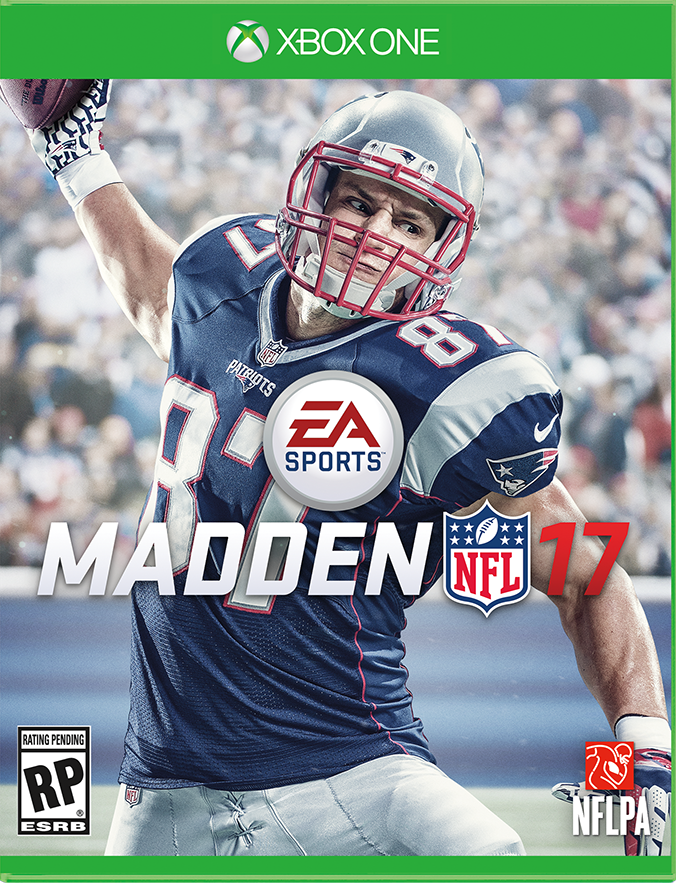
                        (Madden Gods, please don’t hurt Gronk. Credit: madden-school.com)

Regardless of my thoughts, Madden is still a brilliantly run series. Working with the right individuals and appealing to the appropriate consumers has gone a long way to making the series a hit, and the exclusivity rights agreement simply cannot be understated. The series’ commitment to quality and developing itself in the greater football community has made it the marquee sports’ game in interactive entertainment. It should be used as a model for any aspiring sports series in the market today, and I look forward to seeing how it continues over time.

Sources:
Hruby, Patrick, The Franchise: The inside story of how “Madden NFL” became a video game dynasty, http://espn.go.com/espn/eticket/story?page=100805/madden,
Surette, Tim and Feldman, Curt, Big Deal: EA and NFL ink exclusive licensing agreement, http://www.gamespot.com/articles/big-deal-ea-and-nfl-ink-exclusive-licensing-agreement/1100-6114977/, 1/24/2005